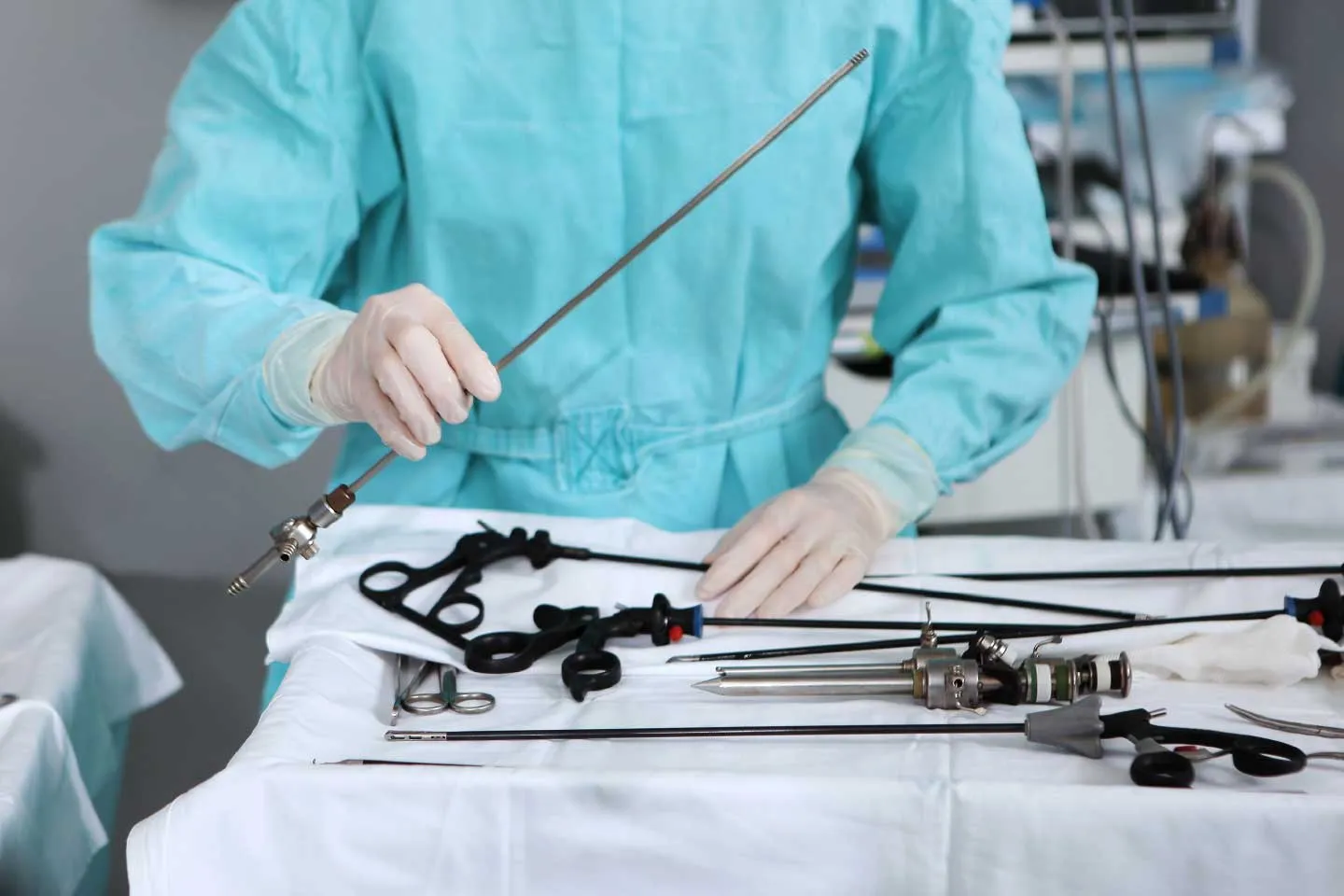
Over the last few decades, surgery has undergone a major transformation with the advent of laparoscopic or minimal access surgery (MAS). This technique uses tiny incisions, high-definition cameras, and specialized surgical tools to perform even the most complex operations with far less trauma than traditional open surgery.
For patients, this means less pain, fewer scars, faster recovery, and lower risk of complications.
Dr. Niranjan P, a skilled Surgeon, is highly trained in performing both basic and advanced laparoscopic procedures. His surgical approach blends cutting-edge technology with precision, safety, and compassionate care -whether it’s a routine gallbladder removal or a complex bariatric or colorectal surgery.
Understanding Laparoscopic / Minimal Access Surgery
In a laparoscopic procedure:
- Small incisions (often 0.5–1 cm) are made instead of a large cut.
- A laparoscope -a thin, tube-like instrument with a light and camera -is inserted to project a magnified view of the inside of the body onto a monitor.
- Specialized instruments are inserted through additional small ports to perform the surgery.
- After the procedure, the incisions are closed with fine sutures or surgical tape.
This “keyhole” approach offers both diagnostic (looking inside the abdomen to detect problems) and therapeutic (treating or removing diseased tissue) capabilities.
Benefits of Laparoscopic Surgery Compared to Open Surgery
Patients prefer laparoscopic surgery because it offers:
- Minimal scarring – Small incisions heal faster and are cosmetically better.
- Reduced pain – Less tissue trauma means lower pain levels after surgery.
- Shorter hospital stay – Many procedures allow discharge within 24–72 hours.
- Faster recovery – Patients can return to work and normal activities sooner.
- Lower infection risk – Smaller wounds reduce exposure to bacteria.
- Less blood loss – Smaller cuts and precise dissection minimize bleeding.
Basic Laparoscopic Procedures by Dr. Niranjan P
Basic minimal access procedures are often shorter, less complex, and suitable for a wide range of patients.
Laparoscopic Cholecystectomy
- Removal of the gallbladder for gallstones or chronic cholecystitis.
- Gold-standard treatment for gallbladder disease.
- Most patients resume normal diet and work within a week.
Laparoscopic Appendectomy
- Removal of an inflamed appendix before rupture.
- Reduces risk of infection and speeds up recovery.
Diagnostic Laparoscopy
- Allows direct visualization of abdominal organs to detect tumors, adhesions, or unexplained pain.
- Often used when scans are inconclusive.
Laparoscopic Hernia Repair
- Repair of inguinal, femoral, umbilical, or ventral hernias using mesh reinforcement.
- Minimal post-op discomfort and quicker return to physical activity.
Advanced Laparoscopic Procedures by Dr. Niranjan P
Advanced minimal access surgeries require higher technical expertise and are used for complex abdominal and pelvic conditions.
Laparoscopic Colorectal Surgery
- For colon and rectal cancers, polyps, inflammatory bowel disease, or diverticulitis.
- Preserves bowel function while ensuring complete cancer removal when required.
Laparoscopic Bariatric (Weight-Loss) Surgery
- Includes sleeve gastrectomy, gastric bypass, and mini gastric bypass.
- Helps reduce excess weight and improves obesity-related conditions such as diabetes and hypertension.
Laparoscopic Gastrointestinal (GI) Surgery
- Complex stomach and small bowel procedures for cancer, ulcers, or obstructions.
- Promotes quicker bowel function recovery.
Laparoscopic Hepato-Pancreato-Biliary (HPB) Surgery
- Includes liver resections, pancreatic tumor removal, and bile duct exploration.
- Requires advanced skill due to delicate organ structures.
Complex Hernia Repairs
- For recurrent or large abdominal hernias often involving 3D mesh placement.
Who Can Undergo Laparoscopic Surgery?
Most abdominal and pelvic surgeries can be performed laparoscopically, but suitability depends on:
- The nature and severity of the condition.
- Patient’s overall health and fitness for anesthesia.
- Presence of previous abdominal surgeries (which may cause adhesions).
- Emergency vs. planned procedure.
Pre-Surgical Preparation
Dr. Niranjan P ensures every patient is thoroughly prepared for surgery:
- Medical assessment – Comprehensive evaluation to identify risks.
- Imaging and blood tests – Ultrasound, CT scans, or MRIs for accurate diagnosis.
- Lifestyle and dietary guidance – To optimize healing and recovery.
- Medication review – Adjustments to avoid surgical complications.
- Clear instructions – On fasting, pre-op hygiene, and post-op expectations.
The Laparoscopic Surgical Process
- Anesthesia – General anesthesia ensures you remain asleep and pain-free.
- Port placement – Small incisions are made for the laparoscope and instruments.
- CO₂ insufflation – Gas inflates the abdominal cavity for better visibility and maneuverability.
- Precise operation – Guided by magnified imaging, the surgeon completes the procedure with minimal tissue trauma.
- Closure – Small wounds are closed with sutures or glue; dressings applied.
Post-Operative Recovery
Recovery varies depending on the complexity of the surgery:
- Hospital stay – Often 1–3 days for basic cases, 3–5 days for advanced surgeries.
- Pain – Usually mild and manageable with oral medication.
- Diet – Gradual progression from liquids to solids under guidance.
- Activity – Light walking encouraged; heavy lifting avoided for 4–6 weeks.
- Follow-up – Regular check-ups to monitor healing and detect any complications early.
Why Choose Dr. Niranjan P for Basic & Advanced Laparoscopic Surgery?
- Expertise across the spectrum – From routine gallbladder removal to complex oncological and bariatric procedures.
- State-of-the-art facilities – Modern laparoscopic equipment for precision and safety.
- Individualized care – Each surgery plan is tailored to the patient’s needs.
- Proven track record – High success rates and patient satisfaction.
- Minimally invasive philosophy – Always aiming to minimize pain, scars, and downtime.
Long-Term Care After Laparoscopic Surgery
- Maintain a balanced, fiber-rich diet unless otherwise advised.
- Stay physically active to aid digestion and circulation.
- Attend scheduled follow-ups for optimal long-term outcomes.
- Avoid smoking and excessive alcohol consumption to promote healing.
Frequently Asked Questions
Q1: Is laparoscopic surgery always possible?
No, in some emergency or complex cases, open surgery may be safer or more effective.
Q2: Will I have big scars?
Only 3–5 small marks, which fade over time and are barely noticeable.
Q3: Is recovery faster than open surgery?
Yes, in most cases patients return to normal activities in 1–2 weeks.
Q4: Are there risks?
Like all surgeries, risks exist but are significantly lower in experienced hands like Dr. Niranjan P’s.
Q5: Can elderly patients have laparoscopic surgery?
Yes, with proper assessment, many elderly patients benefit greatly from minimal access techniques.
Book Your Consulation
For safe, effective, and advanced laparoscopic surgery -whether basic or complex -trust Dr. Niranjan P, a skilled surgeon dedicated to precision, comfort, and quick recovery.

Dr. Niranjan P is a leading General and Laparoscopic Surgeon in Bengaluru, offering advanced minimally invasive treatments focused on precision, safety and faster patient recovery.


© Remedo 2026 | Dr. Niranjan P | All Rights Reserved | Digital Marketing by Remedo