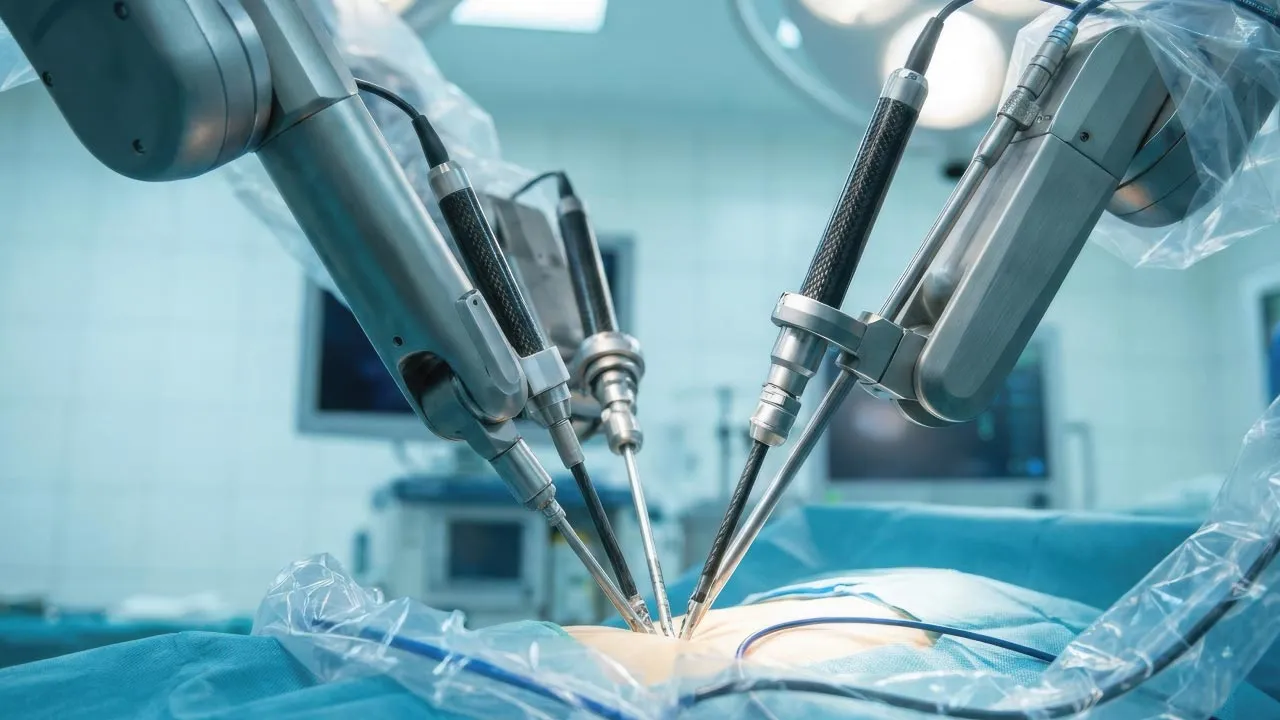
Some surgical procedures can be technically challenging because they involve difficult-to-reach areas, delicate structures, or limited working space.
Robotic surgery is one approach that may be considered for selected complex procedures. It allows the surgeon to control specialized instruments through a robotic surgical system while viewing the operating area through a high-definition camera.
Importantly, the robot does not perform the operation independently. The surgeon remains in control throughout the procedure.
Whether robotic surgery is appropriate depends on the type of operation, the patient's condition, the surgeon's experience, and the available technology.
What Makes Some Surgical Procedures More Complex?
Surgery can become more technically demanding when the operating area is deep inside the body, surrounded by important structures, or difficult to access through conventional instruments.
Complexity may also increase when:
- The anatomy is difficult to access
- The procedure requires precise dissection
- Important blood vessels or organs are nearby
- The operating space is limited
- Previous surgery has caused scar tissue
- The procedure involves multiple structures
- A minimally invasive approach is being considered
In these situations, the surgeon may consider whether robotic technology could provide useful assistance.
How Does Robotic Surgery Help The Surgeon?
During robotic surgery, the surgeon sits at a console and controls instruments positioned inside the patient's body.
Depending on the system being used, robotic technology can provide features such as:
- A magnified, three-dimensional view of the surgical area
- Flexible instruments designed for precise movements
- Improved control of small instrument movements
- The ability to work in confined spaces
- Different angles of instrument movement compared with some conventional laparoscopic tools
These features can be particularly useful during procedures where access and precision are important.
Can Robotic Surgery Be Useful In Difficult-To-Reach Areas?
Yes, in selected procedures.
Some areas of the body can be challenging to access using straight laparoscopic instruments. Robotic instruments may offer greater flexibility and allow the surgeon to approach certain structures from different angles.
This does not mean that every difficult-to-reach operation requires robotic surgery.
The surgeon considers the specific anatomy and surgical objective before choosing the most appropriate technique.
What About Complex Abdominal And GI Procedures?
Robotic systems may be used for selected gastrointestinal and abdominal procedures.
Depending on the condition, robotic surgery may be considered for procedures involving areas such as the stomach, colon, rectum, or other abdominal structures.
For some operations, the ability to control instruments precisely in a confined space can be helpful.
However, the best surgical approach varies from one patient to another. Traditional laparoscopy or open surgery may be more appropriate in certain situations.
Can Robotic Surgery Be Used In Bariatric Procedures?
Robotic technology may also be used for selected bariatric procedures.
The choice depends on the specific operation, the patient's anatomy, previous surgical history, overall health, and the surgeon's assessment.
Robotic assistance may be particularly relevant when the procedure involves technically demanding steps or challenging anatomy.
Patients should ask their bariatric surgeon why a robotic, laparoscopic, or other surgical approach is being recommended in their specific case.
Can It Be Used For Breast Surgery?
Robotic technology has also been explored and used in selected breast surgery approaches, depending on the procedure and the surgical center.
The suitability of robotic assistance depends heavily on the type of breast operation being considered.
Not every breast cancer or breast surgery procedure is appropriate for a robotic approach. Cancer treatment principles and the patient's individual anatomy remain central to surgical planning.
Does Robotic Surgery Mean Smaller Incisions?
Robotic surgery is generally performed through small incisions when used as a minimally invasive approach.
However, incision size is only one part of the decision.
The surgeon must also consider whether a minimally invasive approach can safely achieve the required surgical result. In some circumstances, a larger incision or open procedure may be more appropriate.
The goal is not simply to make the incision smaller. The goal is to choose an approach that is suitable for the patient's condition and the planned procedure.
Is Robotic Surgery Always Better Than Laparoscopic Surgery?
No.
Robotic and laparoscopic surgery are both minimally invasive approaches, and each has situations where it may be useful.
Robotic surgery can provide certain technical advantages, but it also requires specialized equipment and training. The availability of the technology and the surgeon's experience with the particular procedure are important considerations.
A good surgical decision is based on the patient and the operation, not simply on whether robotic technology is available.
What Factors Determine Whether Robotic Surgery Is Appropriate?
Your surgeon may consider:
- The type and complexity of the procedure
- Your anatomy
- Your overall health
- Previous abdominal or other relevant surgeries
- The location and extent of the condition
- Whether minimally invasive surgery is appropriate
- The surgeon's experience with robotic surgery
- The available equipment and surgical facilities
- The potential benefits and limitations of each approach
Sometimes the surgical plan may also need to change during an operation if unexpected findings make another approach safer or more appropriate.
Questions To Ask Your Surgeon
If robotic surgery has been suggested, consider asking:
- Why is robotic surgery being recommended for me?
- What are the alternatives?
- What are the potential benefits and limitations?
- How experienced are you with this particular robotic procedure?
- Would laparoscopic or open surgery be equally appropriate?
- How might my previous surgeries or medical conditions affect the approach?
- What should I expect during recovery?
- Could the surgical approach need to change during the operation?
These questions can help you understand why a particular technique has been selected.
The Robot Is A Tool, Not The Decision-Maker
Robotic surgery can be a useful tool for selected complex procedures, particularly when visualization, instrument flexibility, and precise control may assist the surgeon.
But the technology itself does not determine the best treatment.
The surgeon's assessment, the patient's individual anatomy and condition, the type of procedure, and the overall treatment goal all matter when choosing a surgical approach.
Discuss Your Surgical Options
If you are considering surgery and want to understand whether a robotic, laparoscopic, or conventional approach may be appropriate, Dr. Niranjan P, General, GI, Laparoscopic, Bariatric and Robotic Surgeon, Breast Surgery, can assess your condition and discuss the available surgical options.
Frequently Asked Questions
Q: Does the robot perform the surgery by itself?
A: No. The surgeon controls the robotic instruments throughout the procedure. The robotic system is a surgical tool that can assist with visualization and instrument movement.
Q: Is robotic surgery suitable for every complex procedure?
A: No. Robotic surgery is appropriate only for selected procedures and patients. The surgeon considers the condition, anatomy, surgical goals, available technology, and other factors before recommending an approach.
Q: Is robotic surgery the same as laparoscopic surgery?
A: Both can be minimally invasive approaches, but the instruments and method of control differ. Robotic systems provide the surgeon with specialized instruments and a console-based control system.
Q: Can robotic surgery be used for abdominal and GI procedures?
A: Yes. Robotic systems may be used for selected gastrointestinal and abdominal procedures. Whether they are appropriate depends on the specific condition and surgical requirements.
Q: Does robotic surgery always mean faster recovery?
A: Recovery depends on the type and extent of surgery, the patient's health, and other factors. A minimally invasive approach may offer recovery advantages in appropriate cases, but outcomes vary between patients.
Q: Should I ask about alternatives to robotic surgery?
A: Yes. It is reasonable to ask why robotic surgery is being recommended and whether laparoscopic or open surgery could also be appropriate. Understanding the benefits and limitations of each option can help you make an informed decision.

Dr. Niranjan P is a leading General and Laparoscopic Surgeon in Bengaluru, offering advanced minimally invasive treatments focused on precision, safety and faster patient recovery.


© Remedo 2026 | Dr. Niranjan P | All Rights Reserved | Digital Marketing by Remedo