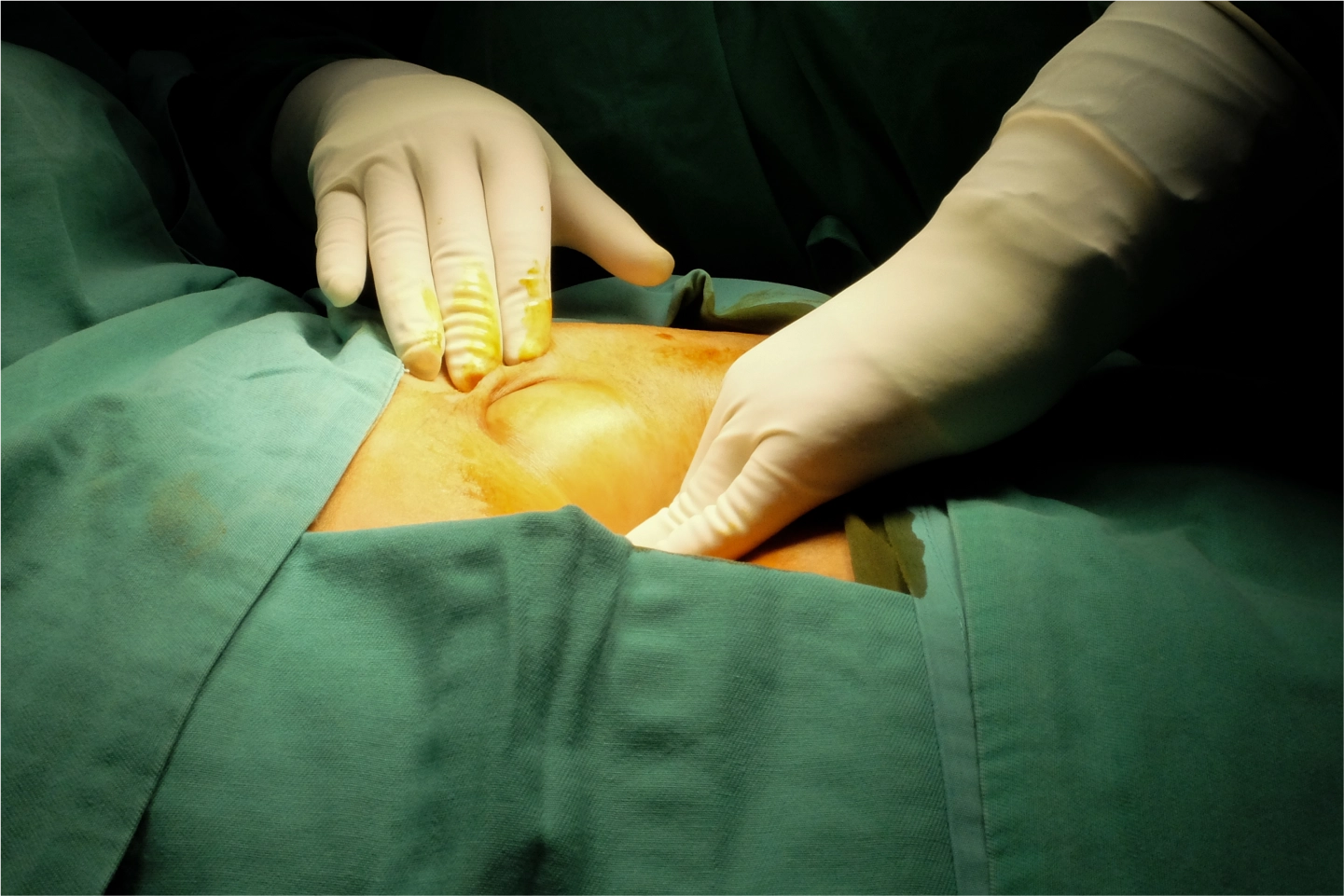
A hernia is an abnormal protrusion of the abdominal organs or tissues like intestines and omentum through a weak spot in the abdominal wall. This bulge increases performing activities that increase intra-abdominal pressure like sitting, standing, squatting, bending, and coughing. It decreases after a few hours of sleep when it is uncomplicated. Abdominal wall hernias are quite common, with a prevalence of 1.7% for all ages.
Hernias can occur in any part of the body and can be congenital or acquired, and some of these can be life-threatening.
The most common type of hernia is an inguinal hernia, which occurs in the groin area when a loop of the intestine or omentum protrudes through a weak spot in the abdominal wall and is usually caused by an injury, but it can also happen as a result of weight gain or old age. It is more common in males.
Surgical repair is generally recommended.
An umbilical hernia is a type of hernia that is found at the belly button or navel. It is one of the most common hernias, which is seen more often in females, especially post-pregnancy.
- Incisional hernias occur due to weakness in a previously operated surgical scar.
- Hernia symptoms vary from person to person, depending upon the severity.
Some common symptoms experienced are
- Swelling or bulge in the abdomen, with or without pain in the area of the groin, belly button, or over a previously operated scar area, which may or may not reduce on lying down and may increase with activities that cause raised intra-abdominal pressure.
- A feeling of heaviness in the groin, belly, or previously operated scar area
- Weakness of muscles, which can be congenital or age-related, leads to hernias.
- Post-surgery wound infections also predispose the operative scar to become weak and more prone to hernias.
- Cigarette smoking may also increase the risk of hernias due to the alteration of collagen architecture.
- In a susceptible person, a small, simple activity like straining during urination or passing stools can lead to hernias.
Chronic cough is also a predisposing factor in susceptible individuals.
It is best to see a doctor if you experience any of these initial symptoms. A doctor can diagnose clinically and support it by using Imaging tests to find the source of the hernia and its dimensions, as well as its contents.
These tests include
- Ultrasound and computed tomography scans.
- The gold standard treatment for hernias at all sites is repair of the defect with mesh.
- In smaller defects less than 1.5 cm, an attempt can be made to repair the defect using sutures.
- However, the use of sutures for larger defects will lead to an increased risk of the hernia coming back.
- Surgical mesh is a medical device used to support weakened tissue around a hernia. The mesh is placed across the weakened area in the abdominal wall, or groin and fixed.
- This thereby supports the abdominal wall and prevents any bulge.
- It can be performed via the conventional open technique or laparoscopic technique.
Laparoscopic repair is performed under general anaesthesia. In laparoscopic hernia repair, a laparoscope is inserted into the abdomen to visualize the hernia defect to repair. It is a minimally invasive procedure, and it is seen that there is faster recovery, less pain, and faster healing with laparoscopic procedures.
If left untreated or neglected, they can lead to dangerous, life-threatening complications.
We help your hernia heal!

Dr. Niranjan P is a leading General and Laparoscopic Surgeon in Bengaluru, offering advanced minimally invasive treatments focused on precision, safety and faster patient recovery.


© Remedo 2026 | Dr. Niranjan P | All Rights Reserved | Digital Marketing by Remedo