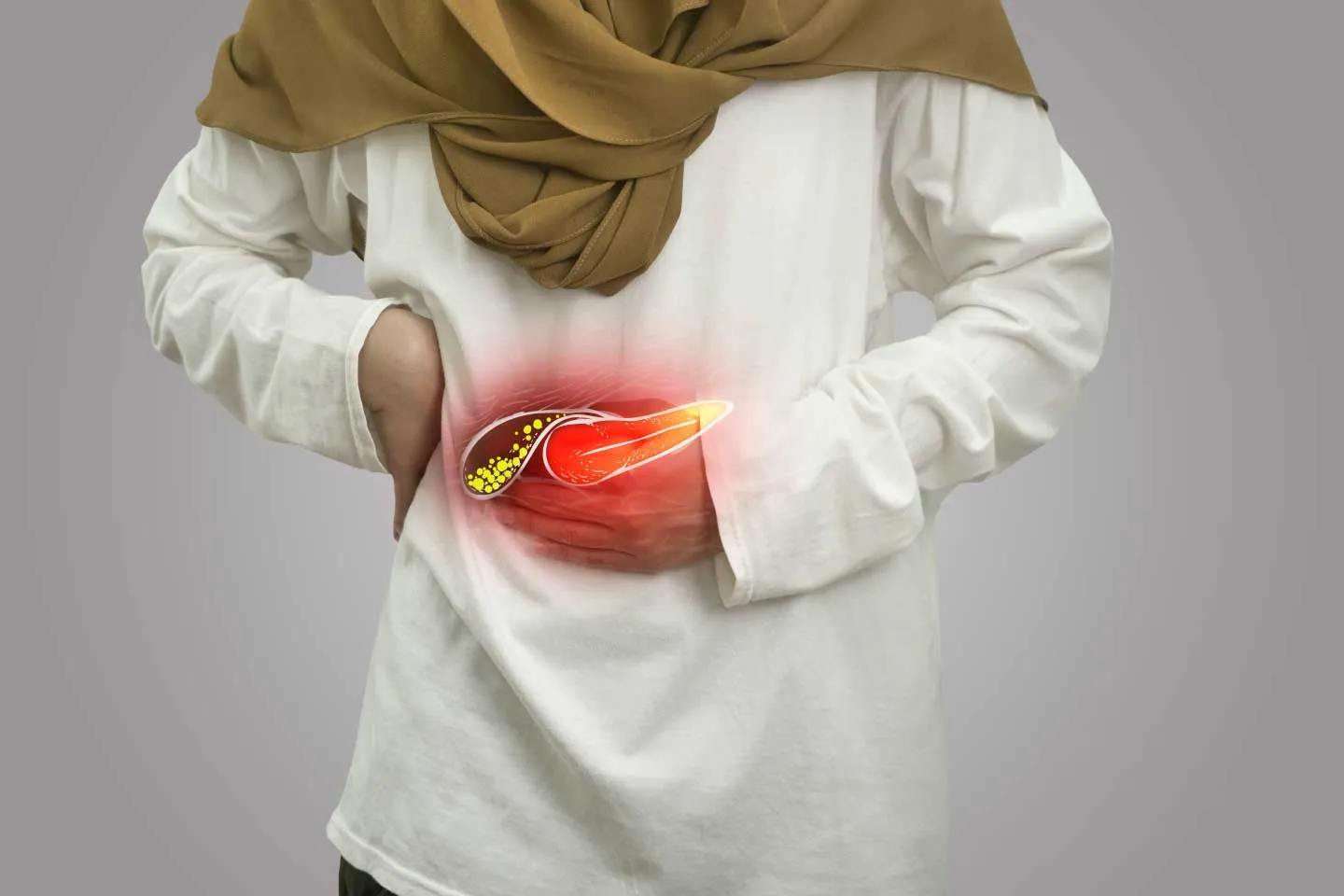
Gallstones: Debunk the Myths
Gallstones are the most common disease of the gallbladder. Technically, we call it cholelithiasis. These are hard deposits made up of cholesterol or bilirubin that can cause sharp pain in the upper right of the abdomen. Their size can vary and commonly affect 15%-20% of those over 65. Most people diagnosed with gallstones need treatment, and it commonly affects women, but men are equally at risk
Gallstone affects more women, but men still are at risk. Most people with gallstones experience symptoms such as:
- Pain in the upper belly
- Pain in right shoulder or back
- Indigestion
- Vomiting
- Fever and chills
- Dark urine and light-colored stool
Earlier gallstones were referred to more as disease-causing jaundice due to a lack of awareness and a delayed approach to consulting a doctor.
There is a treatment for gallbladder stones.
- Laparoscopy:- The most common type of gallstone surgery that requires general anaesthesia. The surgeon will make a small incision of 4 to 5 inches on the abdomen, where they will insert the small, lighted device into one of the incisions, check for stones, and carefully remove the gallbladder. The patient will go home on the day of the procedure or the day after if they have no other co-morbidities.
- Open surgery:- This surgery is needed when the gallbladder is scarred, inflamed, or infected.
Due to the advent of a new surgical laparoscopic approach, patients can be quickly discharged the next day of surgery with a completely normal diet with minimal pain and small scars. Patients should approach the nearest surgeon if they suffer from gallstones. It’s a completely curable disease.
Now let’s debunk some of the myths about gallstones
Myth:Gallstone causes gallbladder cancer
Fact: No, it’s not true. Nowadays, 80 percent of people suffer from gallstone, which means gallbladder stone is common but not cancer. Many factors can increase your risk of gallbladder cancer, and scientists have yet to find reliable evidence that correlates gallstones to gallbladder cancer.
Myth: Gall stone can naturally be flushed out
Fact: No, it’s not possible. Many people believe there are natural ways to flush out a gallstone similar to kidney stones. But if a gallstone passes like a kidney stone, it increases the risk of complications like being stuck in the common bile duct. So, there is no reliable way to “flush” gallbladder stones.
Myth: No life after gallbladder removal.
Fact: Most patients do not face problems after gallbladder removal, and you can<|fim_middle|> gallbladder removal, and you can lead a normal life. However, very few patients can have digestive problems in the short term, but most cases settle without the need for treatment.
Myth: Gallstone is a hereditary problem
Fact: it is not a hereditary disease; gall stone can be formed due to lifestyle changes. Eating too much oily or eating fast food can accumulate fat and cholesterol, which can later form stones in our bodies. So, there is no relation between heredity and gallstones.
So, Consult your Doctor and be guided for the right treatment.
We are here to help you.
Self-care is a long road away from disease!!!!

Dr. Niranjan P is a leading General and Laparoscopic Surgeon in Bengaluru, offering advanced minimally invasive treatments focused on precision, safety and faster patient recovery.


© Remedo 2026 | Dr. Niranjan P | All Rights Reserved | Digital Marketing by Remedo