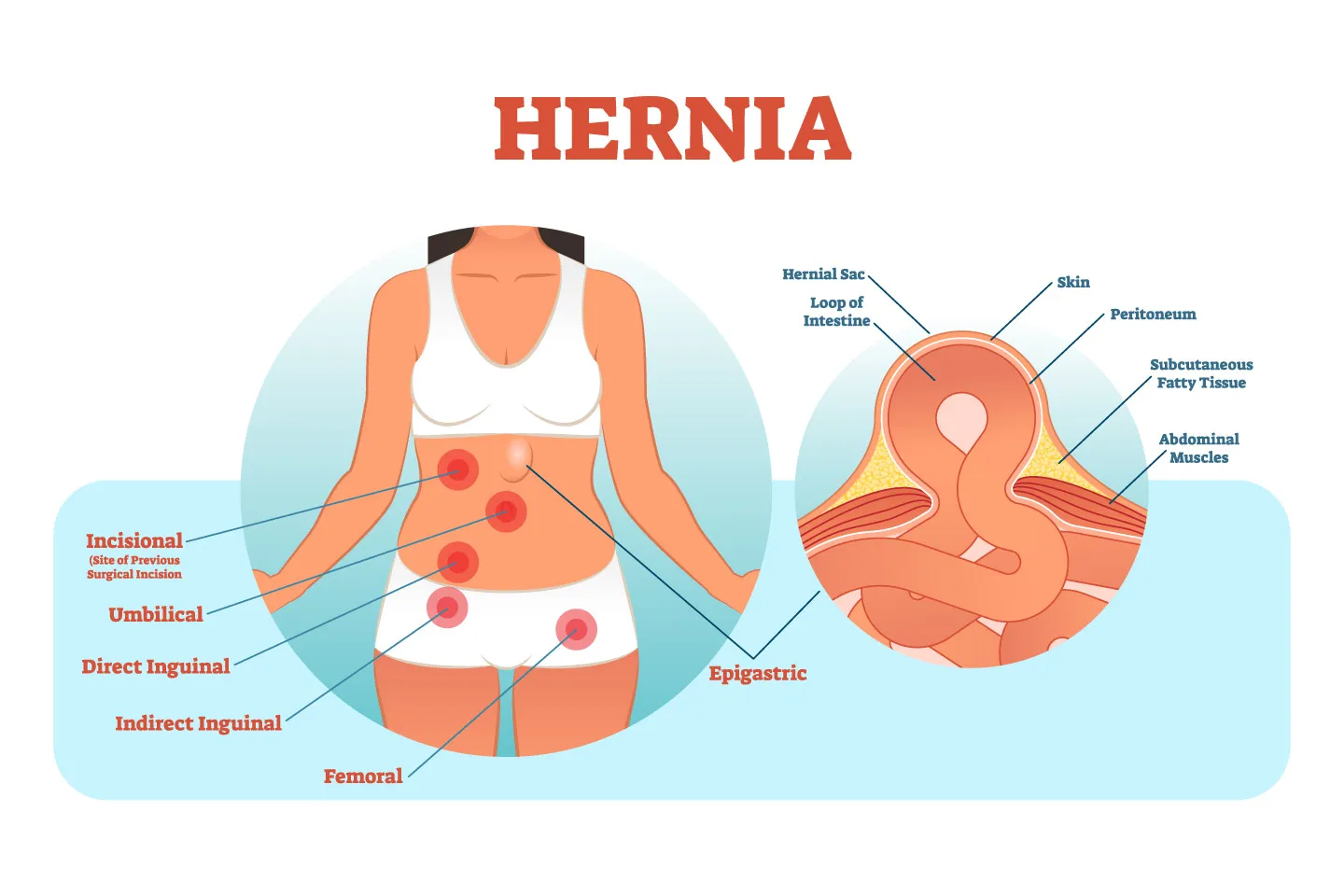
A hernia is more common than you might think and not just something that affects athletes or older adults. Hernias can occur in people of all ages and involve an internal organ or tissue pushing through a weak spot in the surrounding muscle or connective tissue. While some hernias are minor and painless, others can cause serious complications if left untreated.
Understanding the different types of hernias can help you recognize symptoms early and seek the right treatment. Let’s take a closer look at the most common kinds of hernias and how they differ.
Inguinal Hernia
Inguinal hernias are the most common type and occur in the groin area, when a portion of the intestine or fatty tissue bulges through the inguinal canal in the lower abdominal wall.
More common in
- Men (especially older adults)
- People who lift heavy weights
- Those with chronic cough or constipation
Symptoms
- Bulge in the groin that becomes more noticeable when standing or straining
- Pain or discomfort when bending, coughing, or lifting
- Heaviness or dragging sensation in the groin
Treatment
Surgical repair is often recommended, especially if the hernia is painful or growing. Inguinal hernias do not heal on their own.
Umbilical Hernia
An umbilical hernia occurs when tissue pushes through the abdominal wall near the belly button (umbilicus). It’s especially common in infants, but can also affect adults.
In babies
- Often painless
- Appears as a soft bulge when the baby cries or strains
- Most resolve on their own by age 1–2
In adults
- Can be caused by obesity, pregnancy, or heavy lifting
- Often needs surgical repair, especially if painful
When to worry
Seek medical attention if the hernia becomes hard, tender, or cannot be pushed back in this could indicate incarceration or strangulation, which is an emergency.
Hiatal Hernia
A hiatal hernia happens when part of the stomach pushes upward through the diaphragm into the chest cavity. Unlike other hernias, this one is internal and doesn’t cause a visible bulge.
Common in
- People over 50
- Those with obesity or chronic reflux
Symptoms
- Heartburn or acid reflux (GERD)
- Chest pain or discomfort after eating
- Difficulty swallowing
- Belching or a feeling of fullness
Treatment
- Lifestyle changes: avoid large meals, caffeine, alcohol
- Medications for acid suppression
- Surgery (in severe cases)
Femoral Hernia
Less common than inguinal hernias, femoral hernias occur just below the groin, where the femoral artery and vein pass through to the thigh.
More common in
- Women, especially older or post-pregnancy
- People with chronic cough or obesity
Symptoms
- Bulge in the upper thigh or groin area
- May cause discomfort or bowel issues
- Risk of strangulation is higher than with other hernias
Treatment
Usually requires surgical correction, especially if it becomes painful or enlarges.
Incisional Hernia
An incisional hernia can develop after abdominal surgery, when tissue pushes through the site of a surgical incision that hasn’t healed properly.
Risk factors
- Obesity
- Poor wound healing
- Postoperative infection
- Multiple abdominal surgeries
Symptoms
- Soft bulge at or near the surgical scar
- Pain or discomfort, especially with movement or lifting
Treatment
- Small hernias may be monitored
- Larger ones or those with complications may need mesh repair surgery
Epigastric Hernia
This type appears in the upper abdomen, between the breastbone and the belly button. It happens when fat tissue pushes through the abdominal wall.
Symptoms
- Lump or bulge that may come and go
- Mild discomfort, especially when lifting or coughing
- May grow over time
Treatment
Surgery is typically recommended, especially for symptomatic or enlarging hernias.
When Is a Hernia Dangerous?
While some hernias are painless or mild, you should seek immediate medical help if you experience:
- Severe pain
- Sudden bulge that cannot be pushed back
- Redness, nausea, vomiting, or fever
- These may be signs of strangulated hernia, where blood supply to the trapped tissue is cut off - a surgical emergency.
FAQs
Q1: Can hernias heal without surgery?
Small hernias may remain stable for a long time, but they do not “heal” on their own. Surgery is the only definitive treatment, especially if symptoms worsen.
Q2: Are hernias preventable?
While not always preventable, you can reduce your risk by:
- Maintaining a healthy weight
- Avoiding heavy lifting
- Treating chronic cough or constipation
- Strengthening core muscles with safe exercises
Q3: Is hernia surgery safe?
Yes, hernia repair is a common and generally safe procedure, often done laparoscopically with minimal downtime.
Conclusion
Whether it’s a visible bulge or an internal issue like acid reflux, hernias shouldn’t be ignored. While some are mild, others can cause significant discomfort or lead to life-threatening complications. Knowing the different types - inguinal, umbilical, hiatal, femoral, and more - can help you recognize the warning signs and seek the right care.
If you notice any unusual lump, discomfort, or persistent symptoms, consult best surgeon Dr.Niranjan P. Early evaluation can make all the difference in preventing complications and ensuring a smoother recovery.

Dr. Niranjan P is a leading General and Laparoscopic Surgeon in Bengaluru, offering advanced minimally invasive treatments focused on precision, safety and faster patient recovery.


© Remedo 2026 | Dr. Niranjan P | All Rights Reserved | Digital Marketing by Remedo